
Why period floorboards feel draughty, uneven or tired underfoot
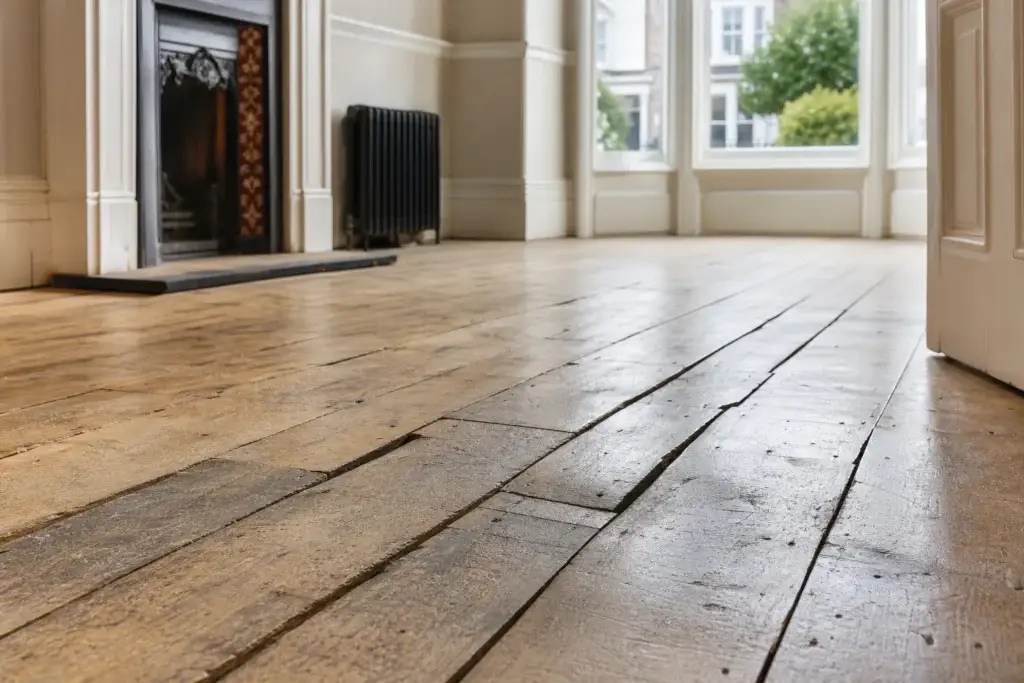
Original floorboards in older homes often show the effects of age, movement and previous repairs. Here’s what those signs usually mean, and when they deserve closer inspection.
Water Marks on Wood Floors: What They Usually Indicate
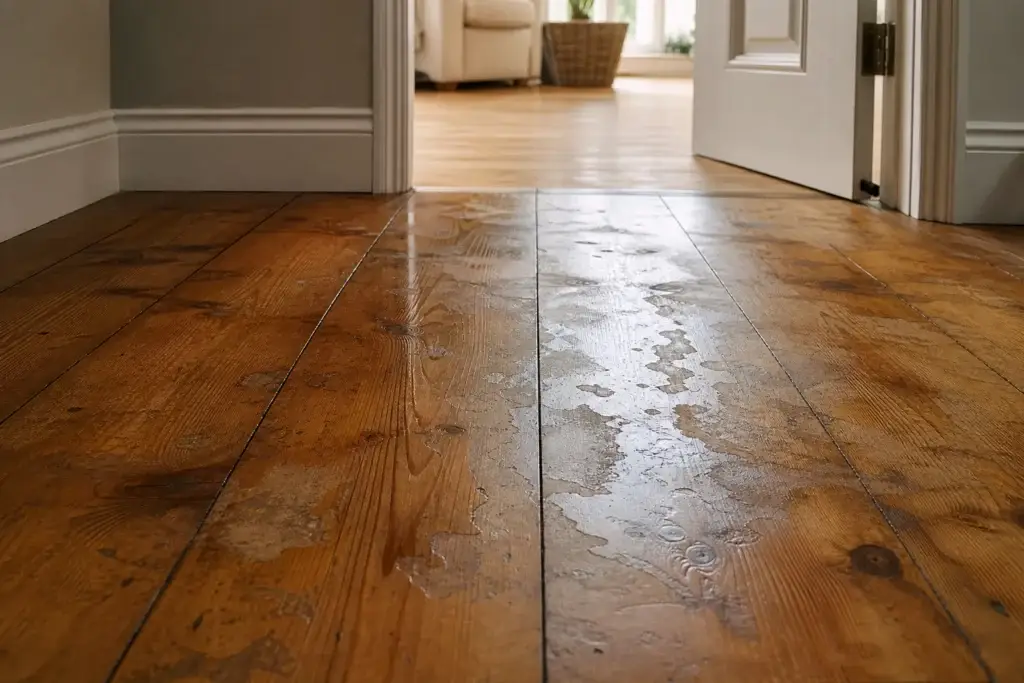
Water marks on wood floors do not all mean the same thing. Some sit in the finish and can be dealt with once the floor is fully dry, while others point to staining, swelling or deeper moisture damage in the timber itself.
A floor that’s gone grey, black or stained: what the marks usually mean

Grey, black and stained patches on a timber floor do not all mean the same thing. Some are surface issues that can be sanded away; others point to moisture, reaction stains or damage that goes deeper than the finish.
Commercial Floors That Take a Beating: Choosing Between Sanding, Repair and Replacement

A worn commercial timber floor does not always need replacing. The right decision depends on the condition of the boards, the subfloor, moisture levels, previous repairs and how much disruption the business can allow.
Flooring in a 1930s House: What Makes These Floors Different to Work With?

1930s houses often hide a mix of original timber flooring, later coverings and altered subfloors. Here’s what usually affects restoration, repair and new installation decisions.
Loose parquet blocks: what causes them and what a proper repair involves

Loose or hollow-sounding parquet does not always mean the whole floor needs replacing. The right repair depends on why the blocks have moved, what is happening underneath them and whether the surrounding floor is still sound.