
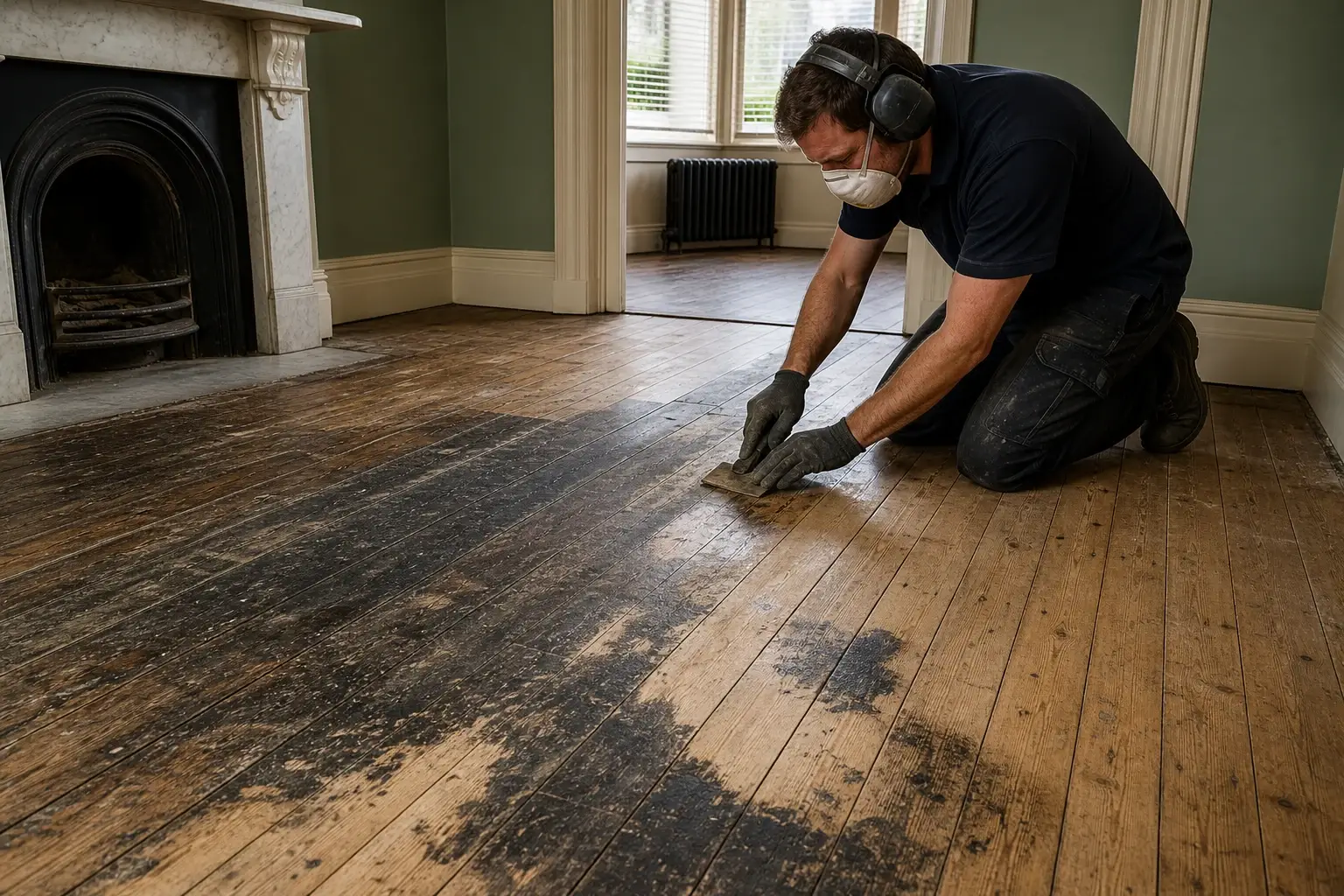
Grey, black and uneven staining on a timber floor can look alarming, but the mark itself does not tell the whole story. In some cases it is only discolouration in the finish or the top layer of timber. In others, it suggests moisture has got into the wood, the floor has reacted with old metal fixings or there is damage beneath a previous covering.
That is why wood floor stains and discolouration need to be read carefully before anyone assumes sanding will solve the problem. A good floor specialist will look at the colour, pattern, location and depth of the mark, then decide whether the floor can be restored, needs a local repair, or is telling you that a board or section should come out.
Grey marks: often age, moisture or surface contamination
Greying is common on older floors, especially in hallways, entrances and rooms that have seen years of foot traffic. Sometimes it is simply the finish wearing away and the timber oxidising at the surface. In other cases, the grey tone comes from dirt ground into an old coating, or from a floor that has repeatedly been cleaned with too much water.
Grey marks can also appear where water has sat on the floor long enough to dull the wood rather than turn it dark. If the greying is only superficial, sanding and refinishing may bring the natural timber back. If the surface has been softened or the timber fibres have lifted, the extent of sanding has to be judged carefully so the floor is not overworked.
Black stains usually mean moisture has done more than mark the finish
Black or very dark patches are more likely to indicate that moisture has penetrated deeper. This can happen after a leak, prolonged damp, plant pots, spills that were not cleaned quickly enough, or historic water ingress around doors, fireplaces or external walls. In timber floors, black staining often means the tannins in the wood have reacted to moisture and, sometimes, to metal.
Not every black mark is the same. A dark stain caused by surface contamination may sand back cleanly. A stain that has travelled through the fibres, or one that is accompanied by cupping, swelling or a softened area underfoot, may not disappear fully with sanding alone. In those cases, a repair or board replacement can be the more realistic option.
Bathrooms, kitchens and entrance areas often show this kind of issue first because they are exposed to more water and temperature change. If the staining appears near a radiator, external doorway or under old pipework, that location can be a useful clue.
Iron-tannin reaction: when old fixings leave dark marks
Some timber species contain tannins that react with iron. If moisture is present, old nails, screws, staples or even metal from previous coverings can leave dark blue-black marks in the timber. This is particularly common in older properties and on original floorboards that have been hidden under carpet, underlay or hardboard for years.
These marks can look like staining from above, but the cause is chemical rather than just dirty finish. A sanding process may reduce the appearance, but if the reaction has penetrated deeply it may not vanish completely. A specialist will usually check whether the marks are localised around fixings, patch repairs or areas where old coverings were attached.
Pet damage and other localised staining
Pet urine can leave stubborn dark marks, especially if it has soaked into gaps or sat on the surface repeatedly. The same is true of spills from food, drinks or cleaning products that were left to dry. These marks are often concentrated in a small area and may have an uneven edge or a smell that remains even after cleaning.
If the stain is shallow, sanding can sometimes improve it significantly. If it has penetrated far into the timber, the mark may remain as a shadow even after refinishing. That is where local repair, selective board replacement or a carefully judged blend of solutions may be needed.
What has come from under the floor can show through later
Occasionally, staining is not from the timber itself but from what was underneath. Old bitumen adhesive, residues from underlay, paint, old polish, damp-damaged backing materials or contamination from previous coverings can all leave marks that only become obvious once the floor is exposed or sanded.
This is one reason old floors uncovered during renovation can be unpredictable. A board may look reasonably sound at first glance, then reveal stubborn patches once the top layer is removed. Articles such as original floorboards under carpet: what you can usually expect to find and what restoration includes explain why assessment matters before work begins.
Can it be sanded out?
Sometimes, yes. If the mark is only in the finish or in the top few fractions of timber, sanding and refinishing may resolve it. If the stain is deeper, the timber itself has been affected, or the board has been weakened by moisture, sanding alone may improve the appearance but not remove the cause.
A flooring specialist will normally check:
- whether the mark is only on the surface or has gone into the wood
- whether the floor has been wet, warped or softened
- if previous repairs, fillers or coatings are contributing to the problem
- whether isolated boards can be replaced without disturbing the rest of the floor
Where the floor is structurally sound, selective sanding and refinishing can often give a good result. Where the timber is badly marked, split or degraded, repairs may be the safer route. In severe cases, replacement of affected sections is more sensible than forcing a finish over damaged wood.
If you are trying to work out whether a marked floor can be saved, it helps to think in terms of cause rather than colour. Grey, black and stained timber all look different, but the real question is what has happened to the wood beneath the surface.
That is the point at which a proper inspection matters more than guesswork.