
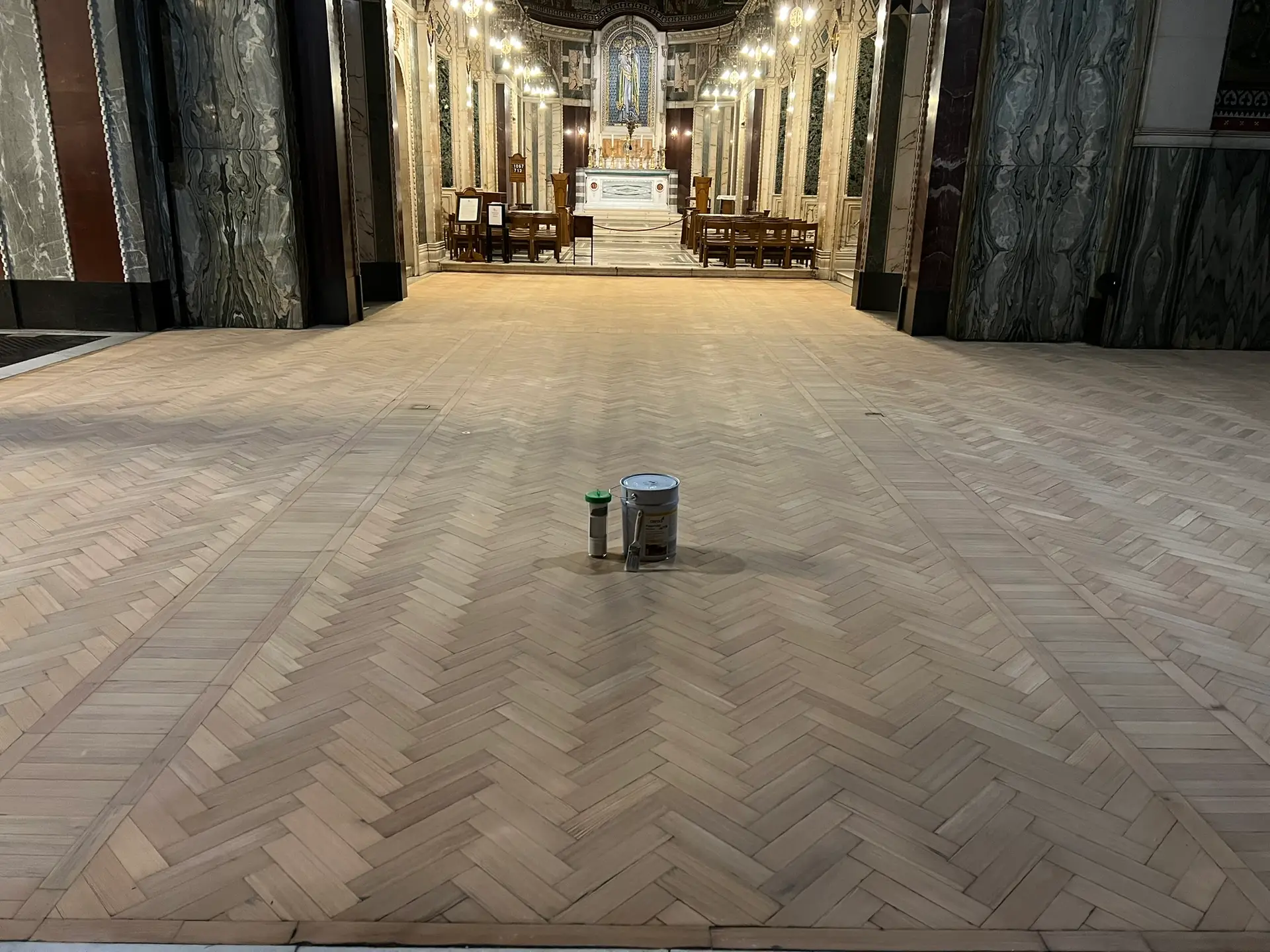

Out-of-hours flooring work for busy premises: what usually needs planning
In occupied commercial premises, flooring work rarely depends on the tools alone. Access, trading hours, noise, dust control, drying times and phased working all shape what can realistically be done outside normal business hours.

A floor that’s gone grey, black or stained: what the marks usually mean
Grey, black and stained patches on a timber floor do not all mean the same thing. Some are surface issues that can be sanded away; others point to moisture, reaction stains or damage that goes deeper than the finish.

Flooring a Victorian hallway: what to consider before you choose a finish or replacement
Victorian hallways have to work harder than most rooms: they take heavy footfall, collect draughts and dirt, and often hide uneven boards or earlier repairs. The right flooring choice depends on what is already there and how well the subfloor and surrounding details have been prepared.

Why Subfloor Preparation Decides Whether a Wood Floor Succeeds or Fails
A timber floor can only perform as well as what sits beneath it. Moisture, flatness, strength and old coverings all affect how wood flooring, parquet and herringbone behave after installation.

LVT in kitchens, bathrooms and utility rooms: where it makes sense and where it doesn’t
LVT is often a practical choice for busy domestic rooms, but it is not a cure-all. In moisture-prone spaces, the condition of the subfloor, the presence of standing water and the way the room is used all affect whether it is the right solution.

Commercial Floors That Take a Beating: Choosing Between Sanding, Repair and Replacement
A worn commercial timber floor does not always need replacing. The right decision depends on the condition of the boards, the subfloor, moisture levels, previous repairs and how much disruption the business can allow.