
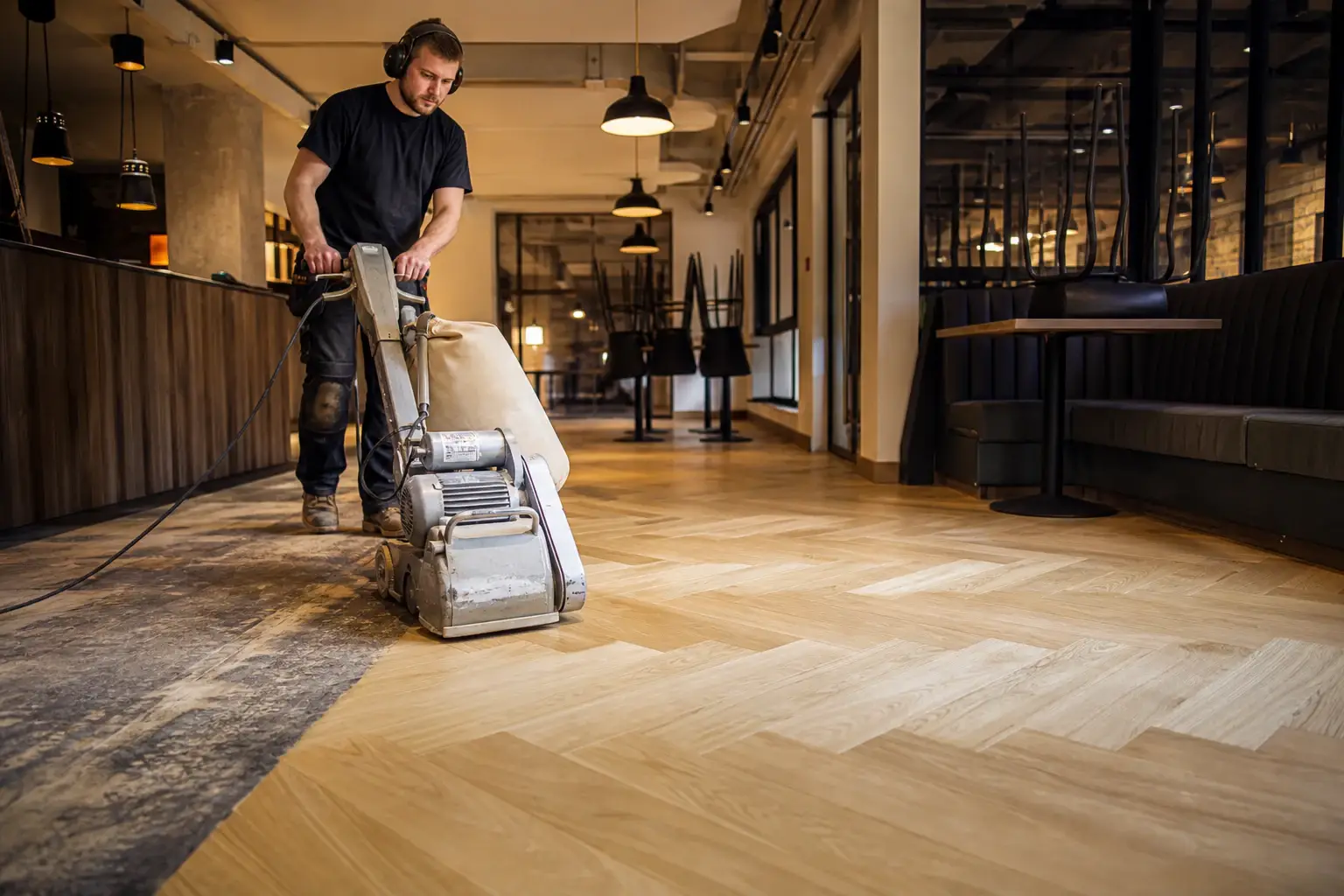
In a busy premises, the question is rarely just can the floor be done? It is usually how can it be done without stopping the building from working? That is where out-of-hours flooring work becomes a planning exercise as much as a flooring one.
For offices, shops, restaurants, pubs, schools and rented commercial units, the practical challenge is fitting sanding, repair or installation around trading hours, staff access, customers and cleaning routines. Some jobs are well suited to evenings or weekends. Others need more time than a short closure allows, especially where drying, curing or staged preparation is involved.
What has to be decided before work starts
The first conversation is usually about access. Can the team work while the building is closed overnight? Will there be keyholder access? Is there a loading bay, goods entrance or service lift to use? In a shared building, it may also be necessary to coordinate with other occupiers, caretakers or managing agents.
Then comes the question of how the space is used. A reception area, corridor or entrance zone may need a different plan from a back office. A restaurant or pub may have a tighter handover window than a retail unit. In schools or community buildings, the timetable can be shaped by term dates, events and daytime footfall.
The flooring itself matters too. Existing timber floors, parquet and engineered wood can all be restored, but each one needs the right approach. LVT installation is different again, because the key issues are usually subfloor preparation, setting-out and allowing time for adhesives or smoothing compounds to perform properly. If the floor is not ready, rushing the work to suit a small overnight slot can create bigger problems later.
Why evenings and weekends are not always enough
Some stages can be done out of hours, but not every stage should be compressed. Sanding, for example, is often more straightforward in a closed building, because furniture can be moved, walkways protected and the work area isolated. Dust control is also easier when the space is not being used, which is why careful preparation is so important. Dust control is one of the main reasons commercial clients choose to plan flooring work outside trading times.
But sanding is only part of the picture. If repairs are needed first, those may add time. Loose boards, damaged parquet blocks or areas affected by previous poor repairs can’t always be dealt with in a single visit. Likewise, if a finish is being applied after sanding, drying and curing times have to be respected. A floor may feel dry enough to walk on, yet still need longer before furniture, displays or heavy traffic are put back.
That is why some projects are better split into phases. A corridor might be done first, then a sales area, then a back office. In a hospitality setting, a dining space may be tackled section by section so the business can keep operating elsewhere. Phased working can feel slower on paper, but it often reduces risk and helps avoid a rushed finish.
Noise, disruption and protection of the surrounding space
Even well-planned flooring work creates some disruption. Sanding machinery makes noise. Boards may need to be repaired or replaced. Protective masking, floor coverings and barrier systems can all take time to put in place. In occupied buildings, those details matter because they protect routes that are still in use and help keep work zones separated from the rest of the premises.
Noise is often the biggest issue for offices and shared buildings, while smell and ventilation can be more important in hospitality or retail settings. If a finish is being used, the room may need to be kept clear for a period afterwards. That is one reason why finish choice should be part of the scheduling discussion, not an afterthought. The right coating is not just about appearance; it also affects how quickly an area can be brought back into use. Oil, lacquer or hardwax oil? is a useful comparison when deciding how a restored floor should perform in a commercial setting.
The projects that benefit most from careful scheduling
Out-of-hours work is especially useful where the floor is in a high-footfall area or a room that cannot simply shut down for long. That might include:
- shop floors and entrances
- office corridors and reception areas
- restaurant and pub dining spaces
- school halls and communal areas
- rented commercial units between occupiers
In these settings, the goal is usually not to squeeze everything into the shortest possible slot. It is to plan the work so the result is sound, the disruption is controlled, and the building can return to use in a sensible way.
That is the practical value of experienced commercial flooring planning: understanding which tasks can be done overnight, which need more than one phase, and which should wait for a proper window rather than being forced into one.
If you are weighing up sanding, repair or installation in an occupied premises, it is worth starting with the timetable as well as the floor. The right sequence often makes the difference between a smooth project and one that causes unnecessary disruption.
For larger refurbishments, it can also help to look at the broader decision between sanding, repair and replacement before a closure period is booked. Commercial floors that take a beating covers that side of the planning process in more detail.