
Black lines between floorboards: what they usually are and when to worry

Dark lines between timber boards are often caused by dust, ageing gaps or old finish breakdown, but they can also point to staining, movement or water ingress. Here’s how to tell the difference.
Water Marks on Wood Floors: What They Usually Indicate
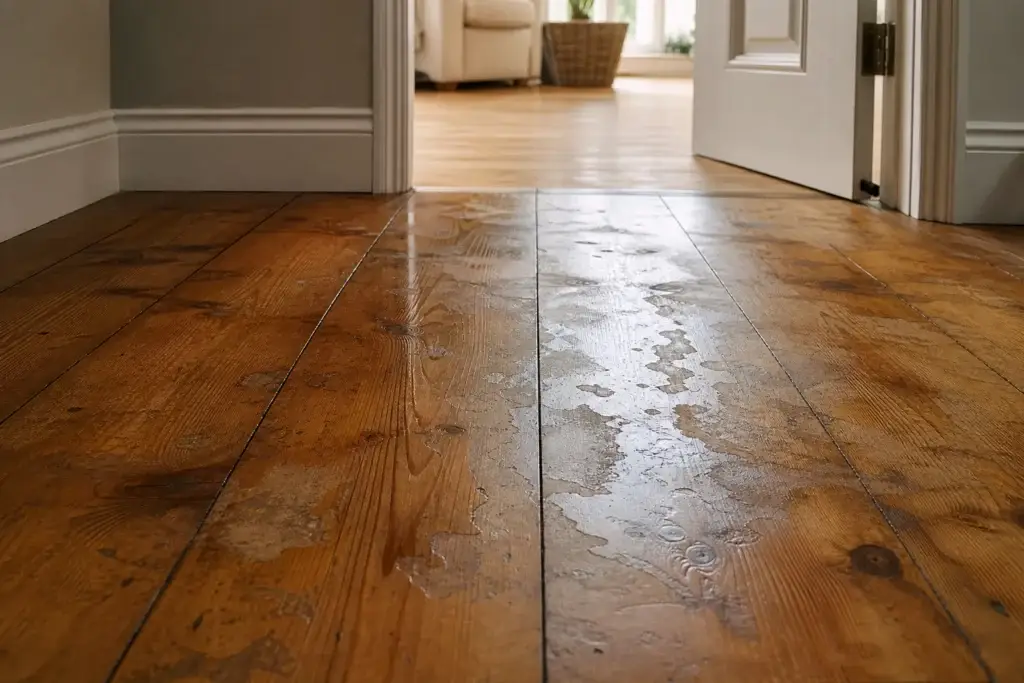
Water marks on wood floors do not all mean the same thing. Some sit in the finish and can be dealt with once the floor is fully dry, while others point to staining, swelling or deeper moisture damage in the timber itself.
Can a tired timber floor be saved, or is replacement the wiser call?

An ageing timber floor is not automatically past saving. The right answer depends on board thickness, prior sanding, movement, staining, water damage and the quality of the subfloor beneath it.
A floor that’s gone grey, black or stained: what the marks usually mean

Grey, black and stained patches on a timber floor do not all mean the same thing. Some are surface issues that can be sanded away; others point to moisture, reaction stains or damage that goes deeper than the finish.
Flooring a Victorian hallway: what to consider before you choose a finish or replacement
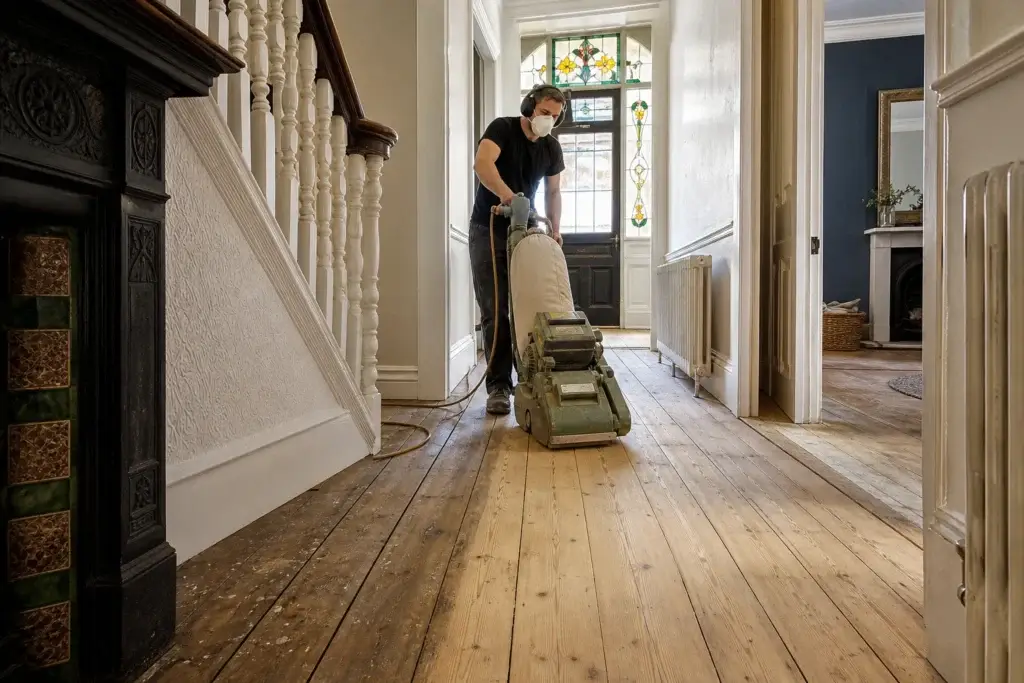
Victorian hallways have to work harder than most rooms: they take heavy footfall, collect draughts and dirt, and often hide uneven boards or earlier repairs. The right flooring choice depends on what is already there and how well the subfloor and surrounding details have been prepared.
Oil, lacquer or hardwax oil? Choosing a finish that suits the floor and the room
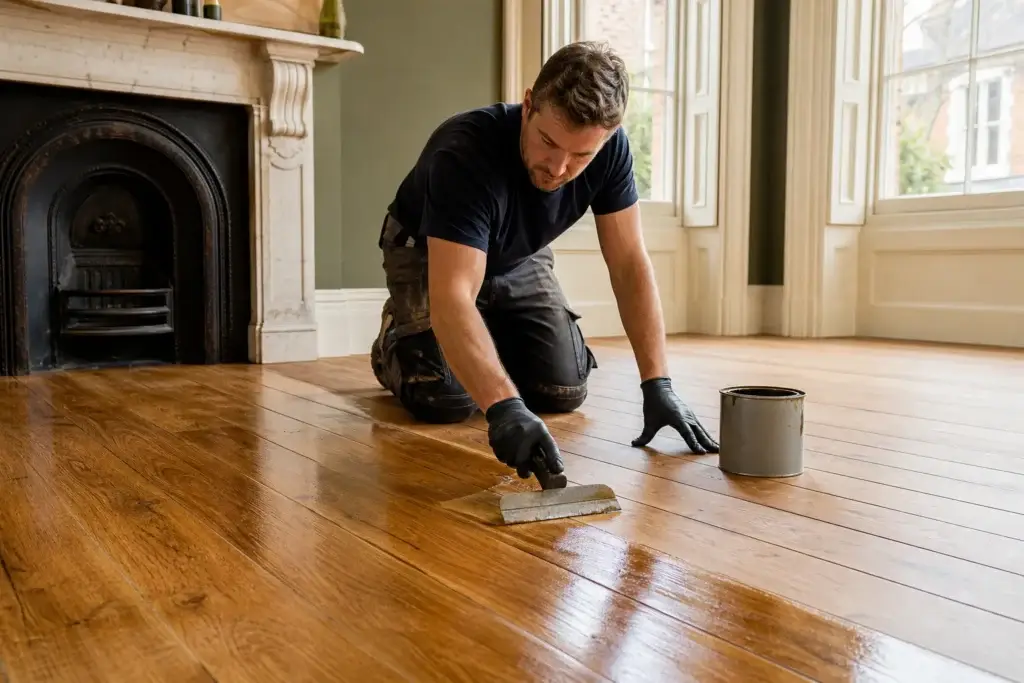
Oil, lacquer and hardwax oil all finish timber differently. The right choice depends on the floor, the room and how you want it to wear over time.
Loose parquet blocks: what causes them and what a proper repair involves

Loose or hollow-sounding parquet does not always mean the whole floor needs replacing. The right repair depends on why the blocks have moved, what is happening underneath them and whether the surrounding floor is still sound.