
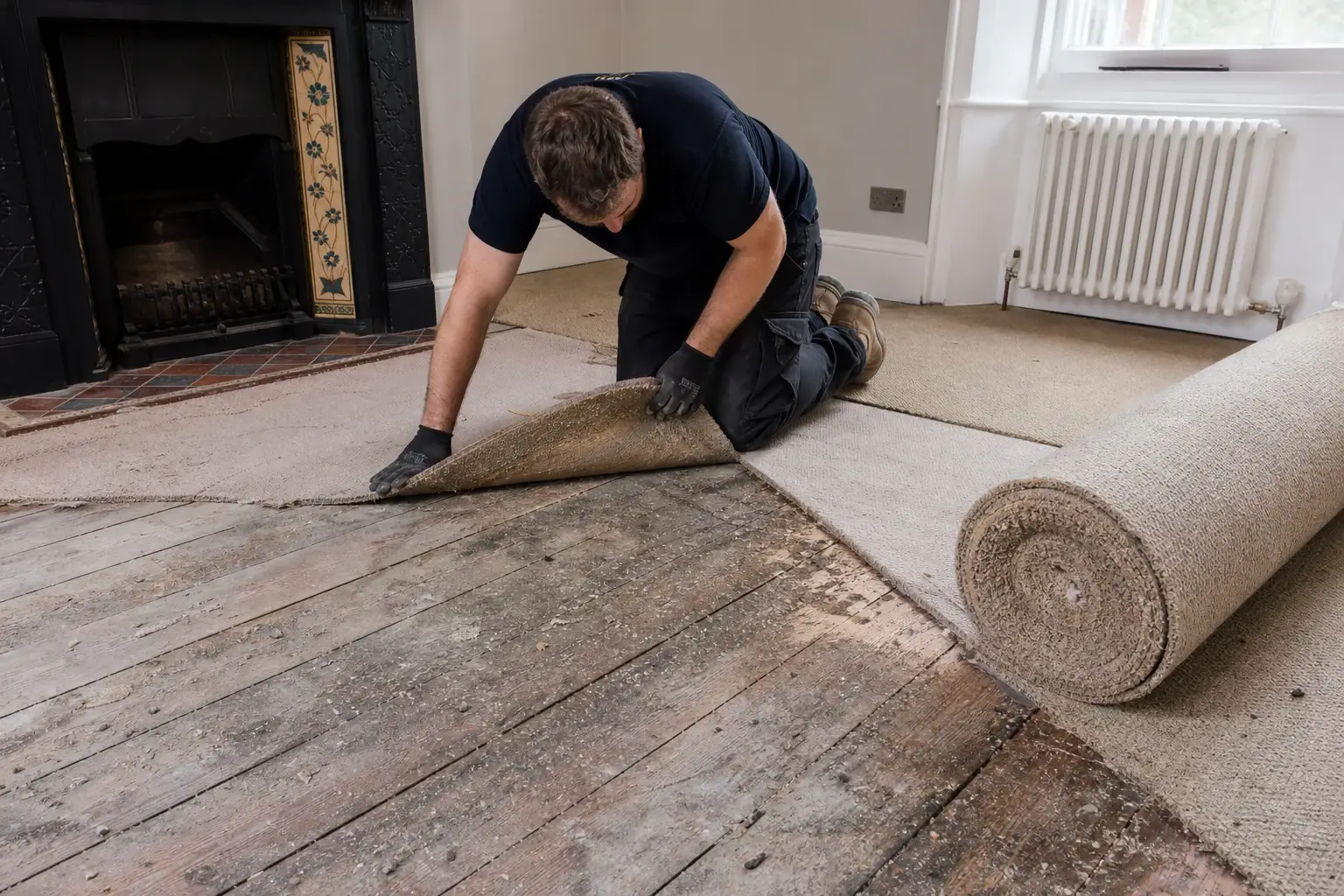
In many Victorian, Edwardian and Georgian homes, original floorboards under carpet are still there. The carpet may have protected them to a degree, but it has also hidden years of wear, old repairs and changes made by previous owners. What you find can be encouraging, disappointing or somewhere in between.
In practice, hidden floorboards are often restorable — but not always in the neat, pristine condition people imagine. The real question is less “are they there?” and more “what shape are they in, and what will it take to bring them back properly?”
If you are weighing up restoration in a period property, it can help to understand the common things that appear once carpet and underlay come up. Touché Flooring also explains more about the wider restoration process here and the difference between a straightforward refresh and more involved repair work in floor repairs.
What is often hiding beneath the carpet?
In older homes, the floor under carpet is usually original pine floorboards or, in some rooms, parquet. Bedrooms, living rooms, hallways and landings are common places to find timber that has been covered for decades.
Once the carpet is lifted, the boards may be surprisingly complete — but they are rarely untouched. Common findings include:
- Old nail holes and tack marks from previous carpets or fixings
- Paint, filler or adhesive residue left behind by earlier coverings
- Scratches, dents and worn patches from years of use before the carpet was fitted
- Missing or replaced boards where earlier repairs were carried out
- Uneven colouring caused by sunlight, moisture or different ages of repair
Some floors have simply been covered and protected. Others have been altered many times, especially in properties that have been renovated gradually rather than in one complete project.
Signs the boards may be worth restoring
Many original timber floors are still salvageable if the boards are structurally sound. The surface may look rough at first, but that does not automatically mean the floor has reached the end of its life.
Restoration is often a sensible option when the boards are still:
- secure and not badly springy underfoot
- free from widespread rot or severe water damage
- thick enough to be sanded safely
- generally consistent in level, with manageable repairs
Professional assessment matters here. A floor can look poor and still be suitable for sanding, filling and finishing. Equally, a floor that looks simple from above may conceal movement, damaged sections or subfloor issues underneath.
That is one reason a careful inspection is important before any decision is made. Touché Flooring’s sanding process page gives a useful sense of how restoration is approached once a floor has been assessed.
Common problems found when carpet comes up
Older properties in Essex and London often reveal a familiar pattern of issues once the carpet is removed. The most common are not usually dramatic, but they do affect how the floor should be treated.
Staining and dark patches
Black marks, shadowing and water stains can appear where spills, leaks or dampness have affected the boards over time. Some staining can be improved through sanding and finishing; deeper marks may remain visible or require more involved repair.
Old adhesive and underlay residue
Glue, foam underlay and tack strips can leave the surface uneven. This is especially common where carpet has been installed several times over the same floor. Removing residue carefully is part of getting a floor ready for restoration.
Gaps and draughts
Once carpet is removed, gaps between boards often become much more noticeable. In older homes this is not unusual, particularly where the building has moved naturally over time. Some gaps can be addressed with gap filling, although not every gap should be filled in every floor. The right approach depends on board width, movement and how the floor is used.
Previous repairs
It is very common to find boards that have been replaced at different times. Some match well, others do not. Patchy repairs are particularly obvious once a floor is sanded back and given a new finish.
Hidden moisture damage
If a room has had a leak, poor ventilation or long-term damp, the boards may show cupping, staining, mould staining or soft areas. In those cases, restoration may still be possible, but only after the source of moisture has been dealt with.
When replacement may be the better option
Not every floor hidden under carpet should be restored. If the boards are badly rotten, heavily patched, too thin to sand safely, or affected by structural movement, replacement may be the more practical route.
The same applies where the subfloor has been altered in a way that leaves the boards unstable or uneven beyond sensible repair. In older homes, this sometimes happens after previous plumbing changes, extensions or earlier renovation work.
A specialist flooring assessment should weigh up the condition of the boards themselves, the subfloor, and the likely result after sanding. The aim is not simply to save every floor at any cost, but to recommend the right solution for the property.
What to expect in period homes
Victorian and Edwardian houses often still have original pine boards with a lot of character under carpet. In Georgian properties, you may find wider boards, older repairs or a more irregular subfloor. Converted buildings and older terraces can be more unpredictable, because floors may have been altered several times over the years.
That unpredictability is not necessarily a problem. It just means the hidden floor should be treated as a historic building element, not a brand-new product waiting to be revealed. In many cases, the result after restoration is better described as honest and characterful rather than perfect.
If you are unsure what you are looking at after carpet is lifted, it is usually worth getting the floor checked before assuming the worst. Touché Flooring works with original floors in period properties across Essex and London, including homes where restoring character matters as much as creating a clean, durable finish.
For homeowners still deciding whether uncovering the boards is worthwhile, the safest approach is simple: lift the carpet, inspect carefully, and get a proper assessment before committing to sanding or replacement.