
What Makes Wood Flooring in Apartments Tricker to Plan Around?

Apartment flooring usually needs more planning than flooring in a house. Sound control, building rules, access, moisture and subfloor condition all affect what can realistically be installed or restored.
LVT in hallways and entrance spaces: what makes these rooms harder on the floor

Hallways and entrance spaces ask a lot of any floor. Learn why LVT can work well there, and what a specialist looks at before installation to help it perform properly.
Wood floors in extensions: what changes when the room is larger, brighter and newer?

Extensions behave differently from the original house. Larger spans, more daylight, level changes and underfloor heating can all affect how a wood floor is specified, installed and finished.
Can a new wood floor go over an uneven subfloor?

A timber floor can sometimes be installed over a subfloor that is not perfectly flat, but only within limits. The real question is whether the base is stable, dry and prepared properly before fitting begins.
Flooring a Victorian hallway: what to consider before you choose a finish or replacement
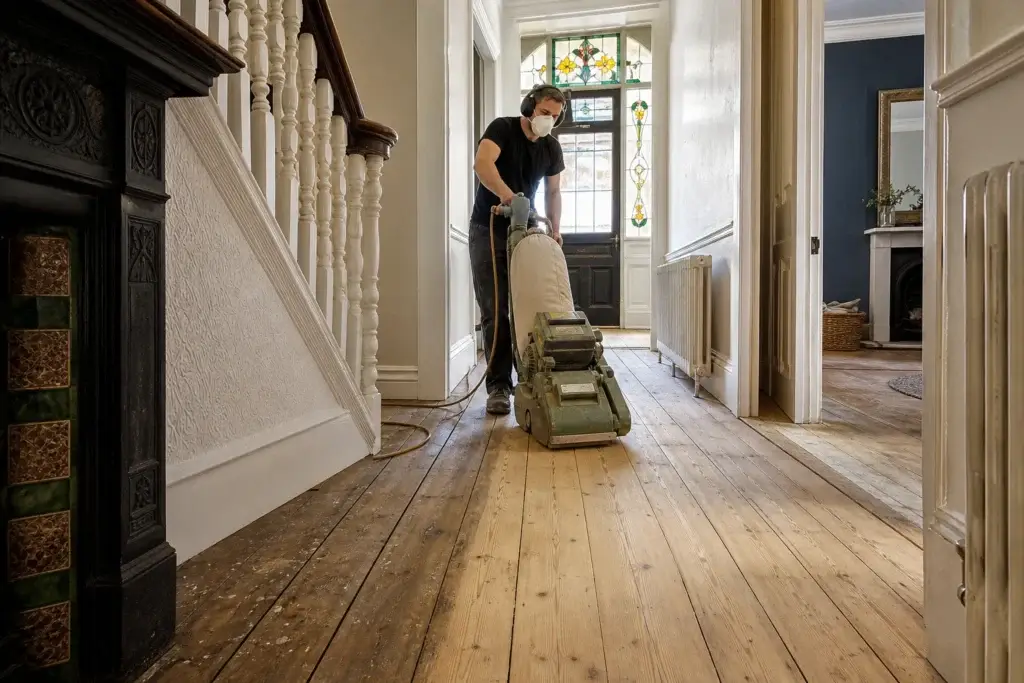
Victorian hallways have to work harder than most rooms: they take heavy footfall, collect draughts and dirt, and often hide uneven boards or earlier repairs. The right flooring choice depends on what is already there and how well the subfloor and surrounding details have been prepared.
Why Subfloor Preparation Decides Whether a Wood Floor Succeeds or Fails

A timber floor can only perform as well as what sits beneath it. Moisture, flatness, strength and old coverings all affect how wood flooring, parquet and herringbone behave after installation.
LVT in kitchens, bathrooms and utility rooms: where it makes sense and where it doesn’t
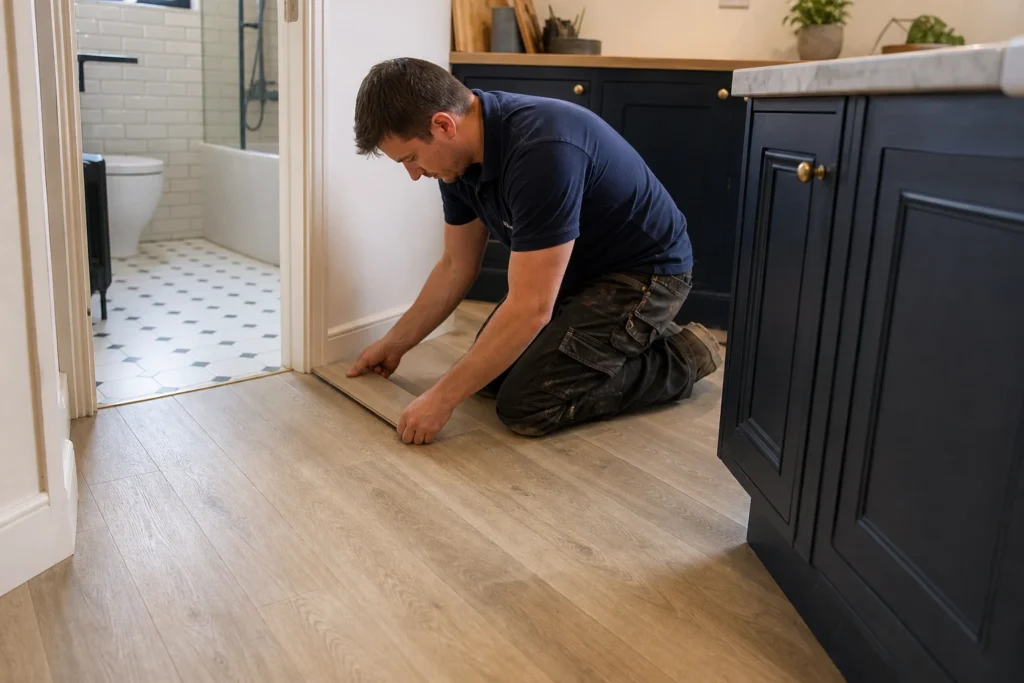
LVT is often a practical choice for busy domestic rooms, but it is not a cure-all. In moisture-prone spaces, the condition of the subfloor, the presence of standing water and the way the room is used all affect whether it is the right solution.
Loose parquet blocks: what causes them and what a proper repair involves

Loose or hollow-sounding parquet does not always mean the whole floor needs replacing. The right repair depends on why the blocks have moved, what is happening underneath them and whether the surrounding floor is still sound.