
Water Marks on Wood Floors: What They Usually Indicate
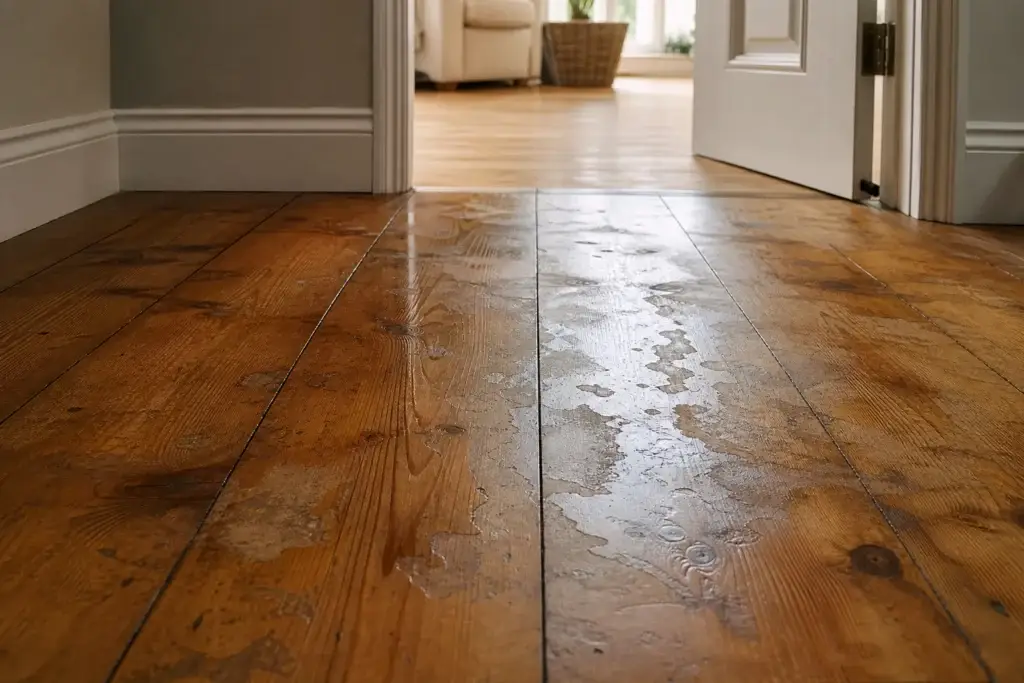
Water marks on wood floors do not all mean the same thing. Some sit in the finish and can be dealt with once the floor is fully dry, while others point to staining, swelling or deeper moisture damage in the timber itself.
Herringbone or chevron? The differences that matter before you choose

Herringbone and chevron are often grouped together, but they do not create the same finish. The board cut, layout and installation details all affect how the floor looks and performs.
Can a new wood floor go over an uneven subfloor?

A timber floor can sometimes be installed over a subfloor that is not perfectly flat, but only within limits. The real question is whether the base is stable, dry and prepared properly before fitting begins.
Why Subfloor Preparation Decides Whether a Wood Floor Succeeds or Fails

A timber floor can only perform as well as what sits beneath it. Moisture, flatness, strength and old coverings all affect how wood flooring, parquet and herringbone behave after installation.
Flooring in a 1930s House: What Makes These Floors Different to Work With?

1930s houses often hide a mix of original timber flooring, later coverings and altered subfloors. Here’s what usually affects restoration, repair and new installation decisions.
Loose parquet blocks: what causes them and what a proper repair involves

Loose or hollow-sounding parquet does not always mean the whole floor needs replacing. The right repair depends on why the blocks have moved, what is happening underneath them and whether the surrounding floor is still sound.