
Can a tired timber floor be saved, or is replacement the wiser call?

An ageing timber floor is not automatically past saving. The right answer depends on board thickness, prior sanding, movement, staining, water damage and the quality of the subfloor beneath it.
Out-of-hours flooring work for busy premises: what usually needs planning
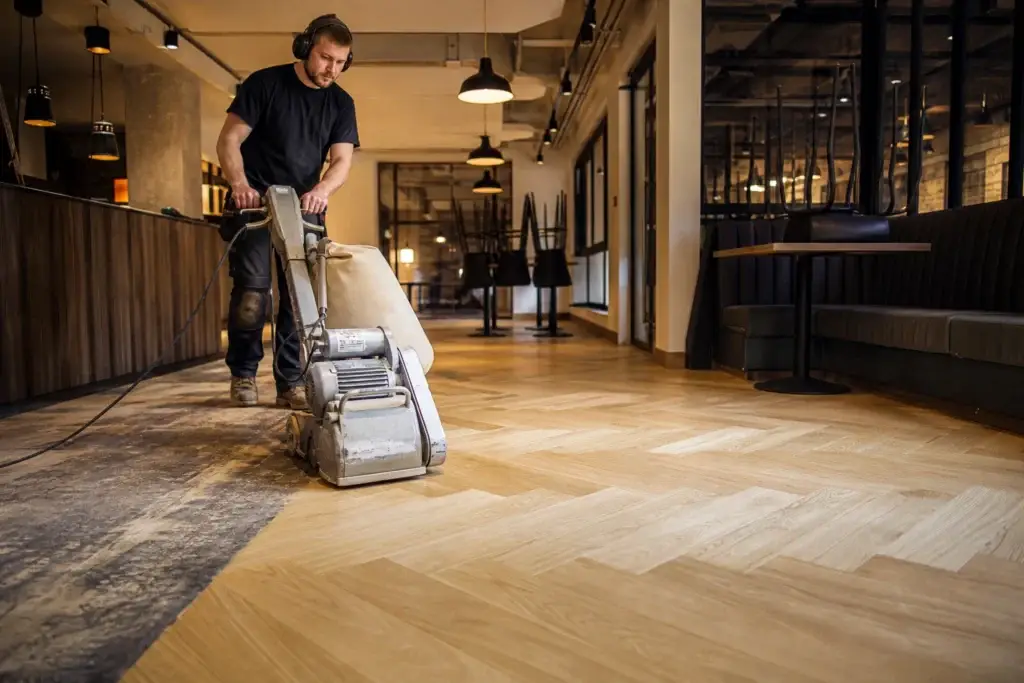
In occupied commercial premises, flooring work rarely depends on the tools alone. Access, trading hours, noise, dust control, drying times and phased working all shape what can realistically be done outside normal business hours.
A floor that’s gone grey, black or stained: what the marks usually mean

Grey, black and stained patches on a timber floor do not all mean the same thing. Some are surface issues that can be sanded away; others point to moisture, reaction stains or damage that goes deeper than the finish.
Commercial Floors That Take a Beating: Choosing Between Sanding, Repair and Replacement

A worn commercial timber floor does not always need replacing. The right decision depends on the condition of the boards, the subfloor, moisture levels, previous repairs and how much disruption the business can allow.
Oil, lacquer or hardwax oil? Choosing a finish that suits the floor and the room
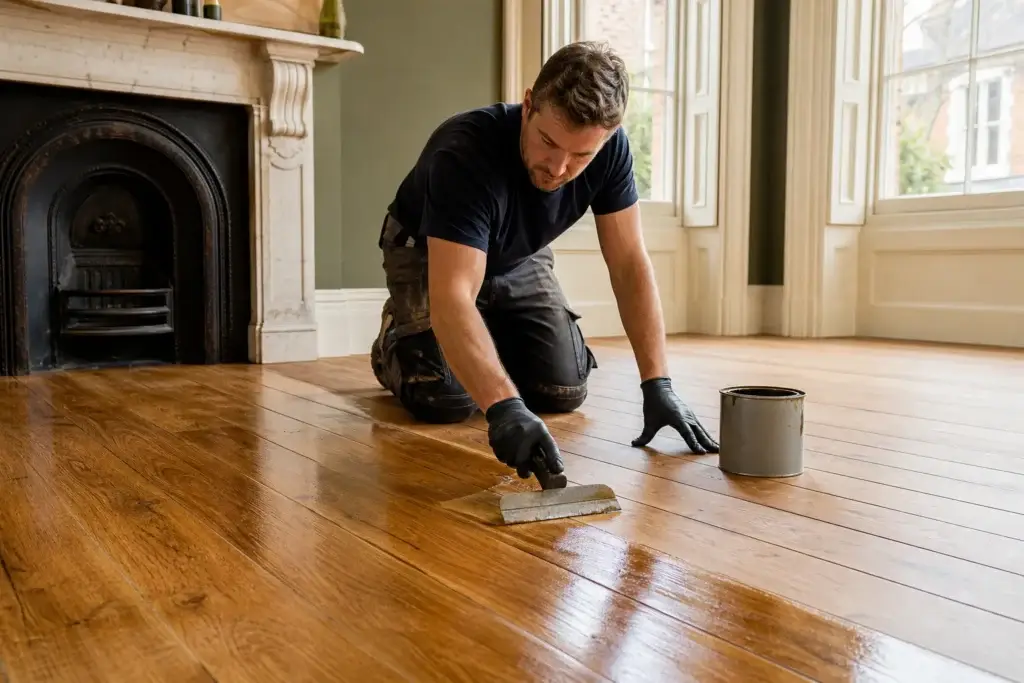
Oil, lacquer and hardwax oil all finish timber differently. The right choice depends on the floor, the room and how you want it to wear over time.