
Water Marks on Wood Floors: What They Usually Indicate
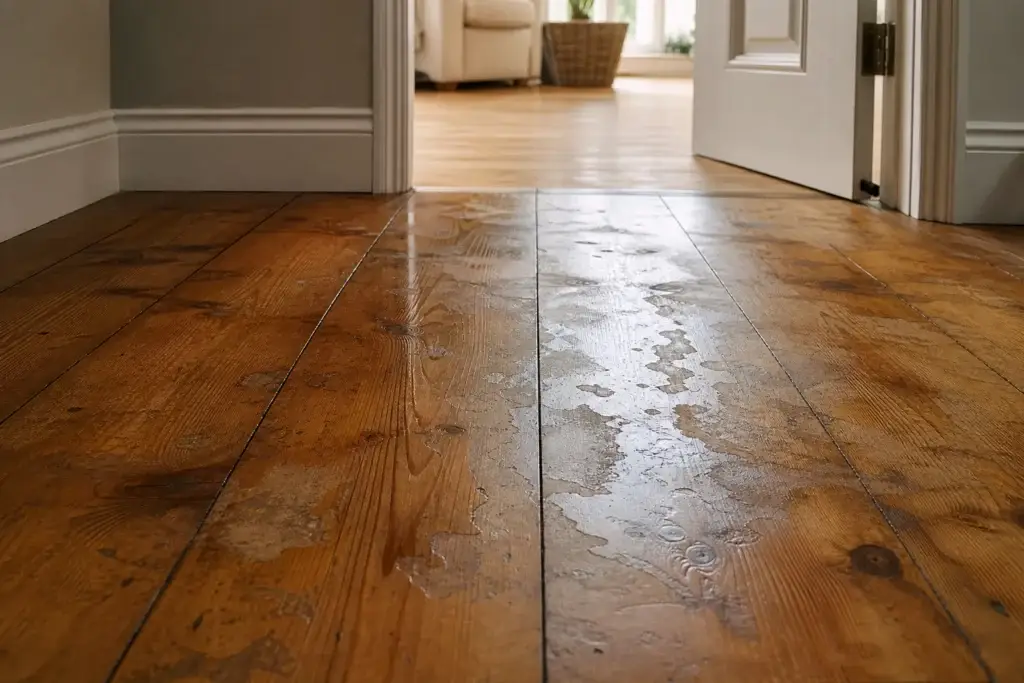
Water marks on wood floors do not all mean the same thing. Some sit in the finish and can be dealt with once the floor is fully dry, while others point to staining, swelling or deeper moisture damage in the timber itself.
Wood floors in extensions: what changes when the room is larger, brighter and newer?

Extensions behave differently from the original house. Larger spans, more daylight, level changes and underfloor heating can all affect how a wood floor is specified, installed and finished.
Flooring a Victorian hallway: what to consider before you choose a finish or replacement
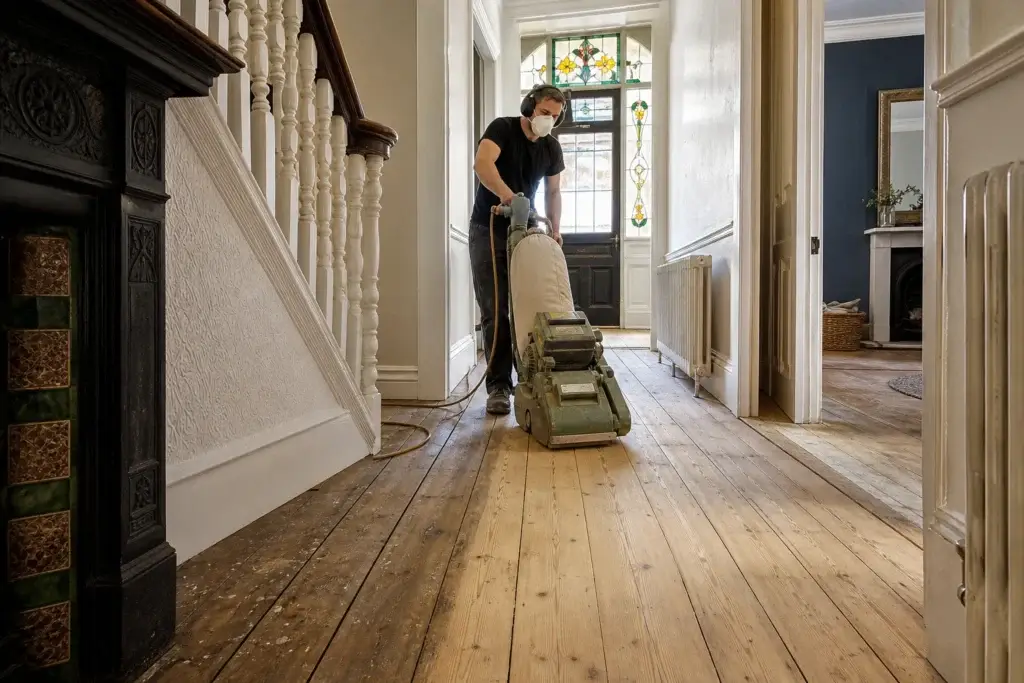
Victorian hallways have to work harder than most rooms: they take heavy footfall, collect draughts and dirt, and often hide uneven boards or earlier repairs. The right flooring choice depends on what is already there and how well the subfloor and surrounding details have been prepared.
Commercial Floors That Take a Beating: Choosing Between Sanding, Repair and Replacement

A worn commercial timber floor does not always need replacing. The right decision depends on the condition of the boards, the subfloor, moisture levels, previous repairs and how much disruption the business can allow.
Patchy Wood Floor Colour After Refinishing: What Usually Causes It

A freshly refinished timber floor should look consistent, but patchiness can appear for a few different reasons. Some are normal during curing; others point to preparation or application problems that need correcting.
Flooring in a 1930s House: What Makes These Floors Different to Work With?

1930s houses often hide a mix of original timber flooring, later coverings and altered subfloors. Here’s what usually affects restoration, repair and new installation decisions.